sole g
A sneaker customisation platform that makes sustainable choices feel like personal ones.
00
problem
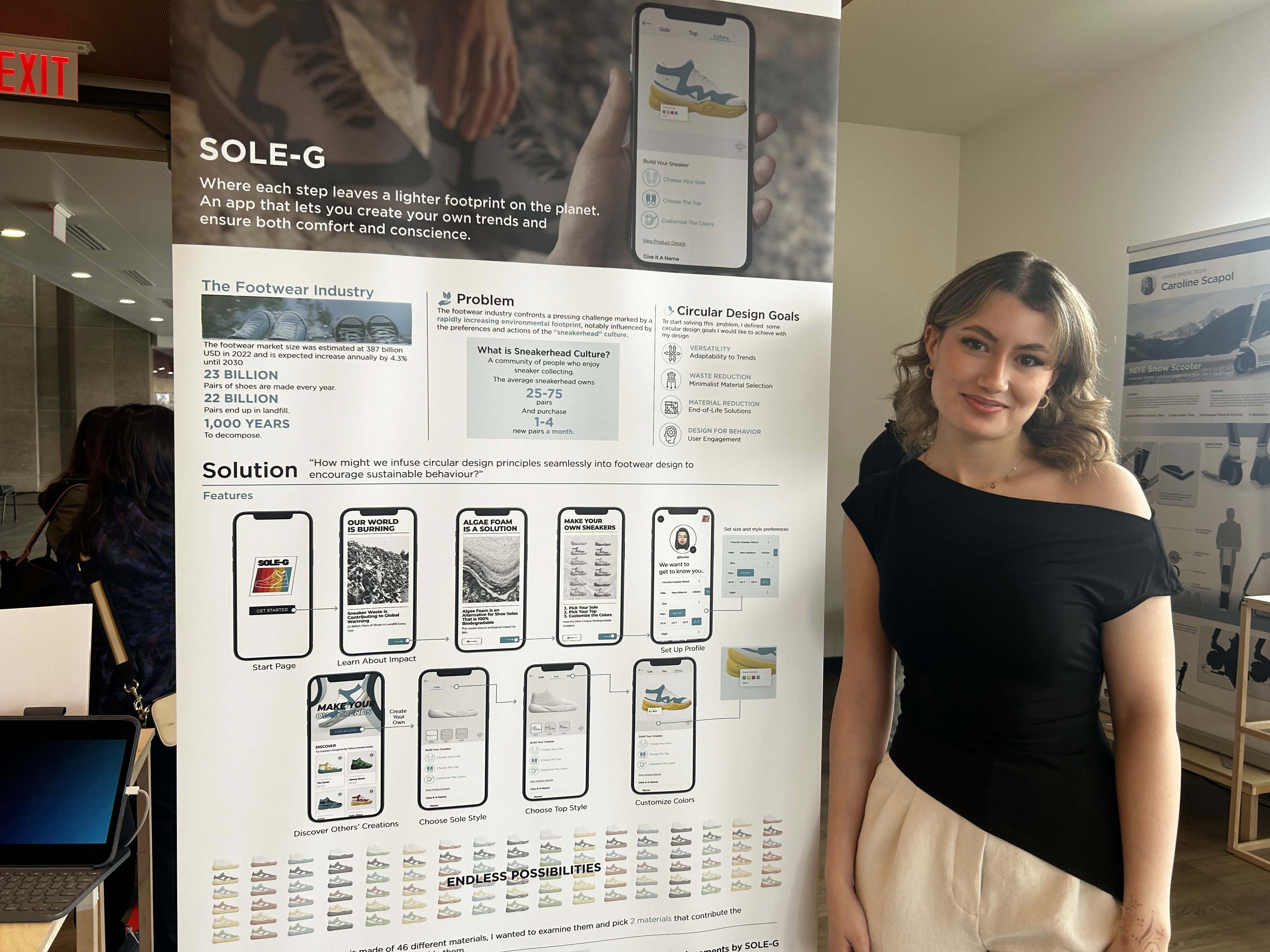
Sneakers are one of the most culturally beloved objects on earth, and one of the most environmentally destructive. The materials that make them desirable are largely the same ones that make them impossible to recycle: synthetic leathers, petroleum-based foams, composite soles fused together in ways that can't be undone. With 22 billion pairs ending in landfill every year, and each pair taking up to a thousand years to decompose, the footwear industry has a problem it can no longer ignore. But the harder problem isn't manufacturing, it's behaviour. Sneakerhead culture is built on accumulation, on newness, on the next drop. Any solution that ignores that culture, or tries to shame it into changing, was never going to work.
solution
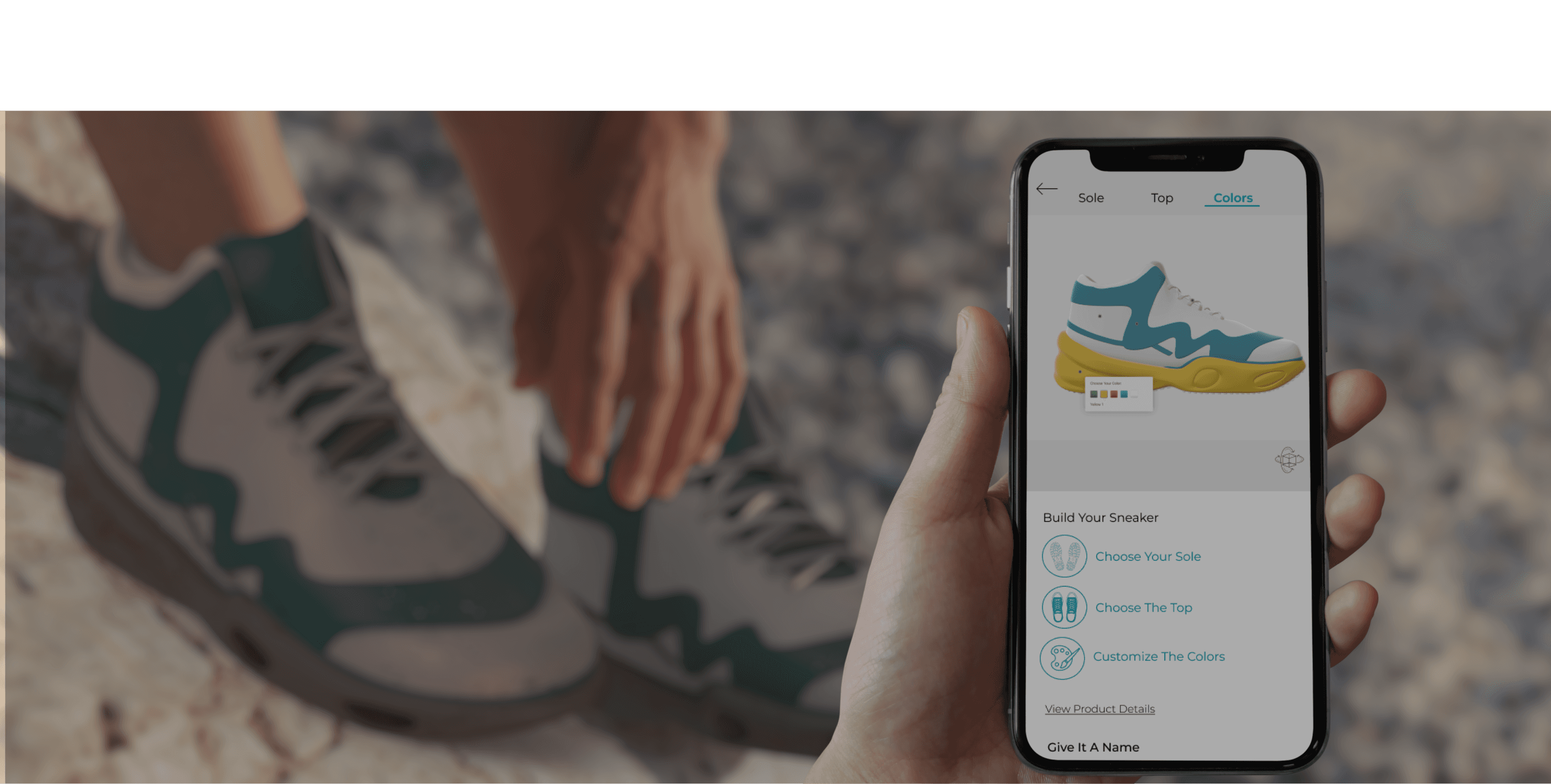
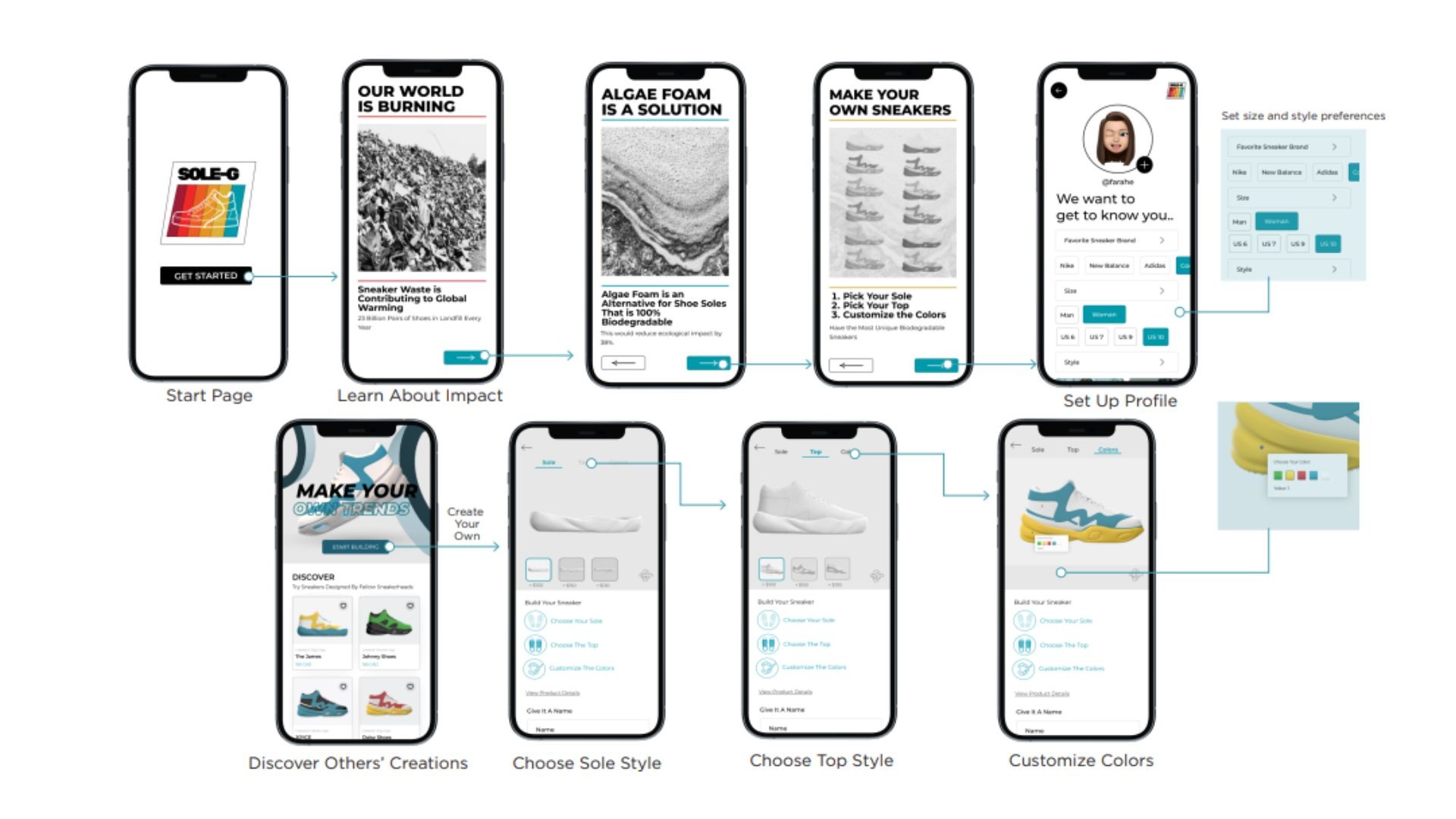
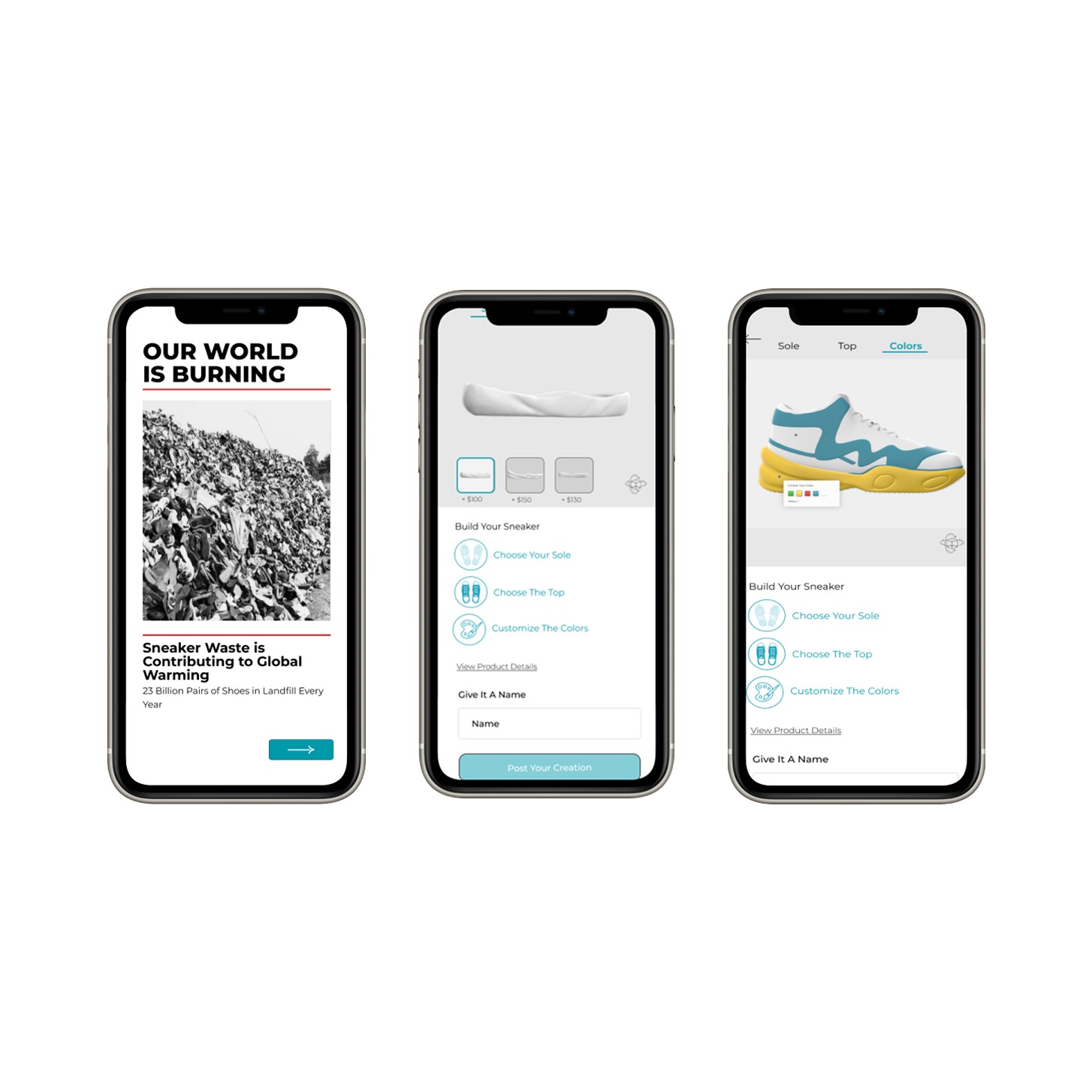
The answer wasn't to build a sustainable sneaker brand. It was to meet sneakerhead culture where it already lives, in the details, the drops, the sense of ownership. I designed SOLE-G as a customisation platform built around a simple but considered foundation: a sole made from algae, a renewable material that sidesteps the petroleum-based foams quietly filling landfills. From there, users move through a set of curated design presets, each one a starting point and not a constraint, personalising their shoe within a framework that had sustainability designed into it from the start. The circular principles aren't a disclaimer at checkout. They're the product. Every preset, every material choice, every interaction was shaped through ethnographic research inside real sneakerhead communities, iterative prototyping, and usability testing, making sure the experience felt like self-expression first, and responsibility second.
From the beginning, SOLE-G was about working with a culture rather than against it. Drawn to the tension between something people love deeply and the quiet damage it leaves behind, I set out to find a design solution that didn't ask anyone to choose between passion and responsibility. The question wasn't how to make sneakers sustainable. It was how to make sustainability feel like something a sneakerhead would actually want.
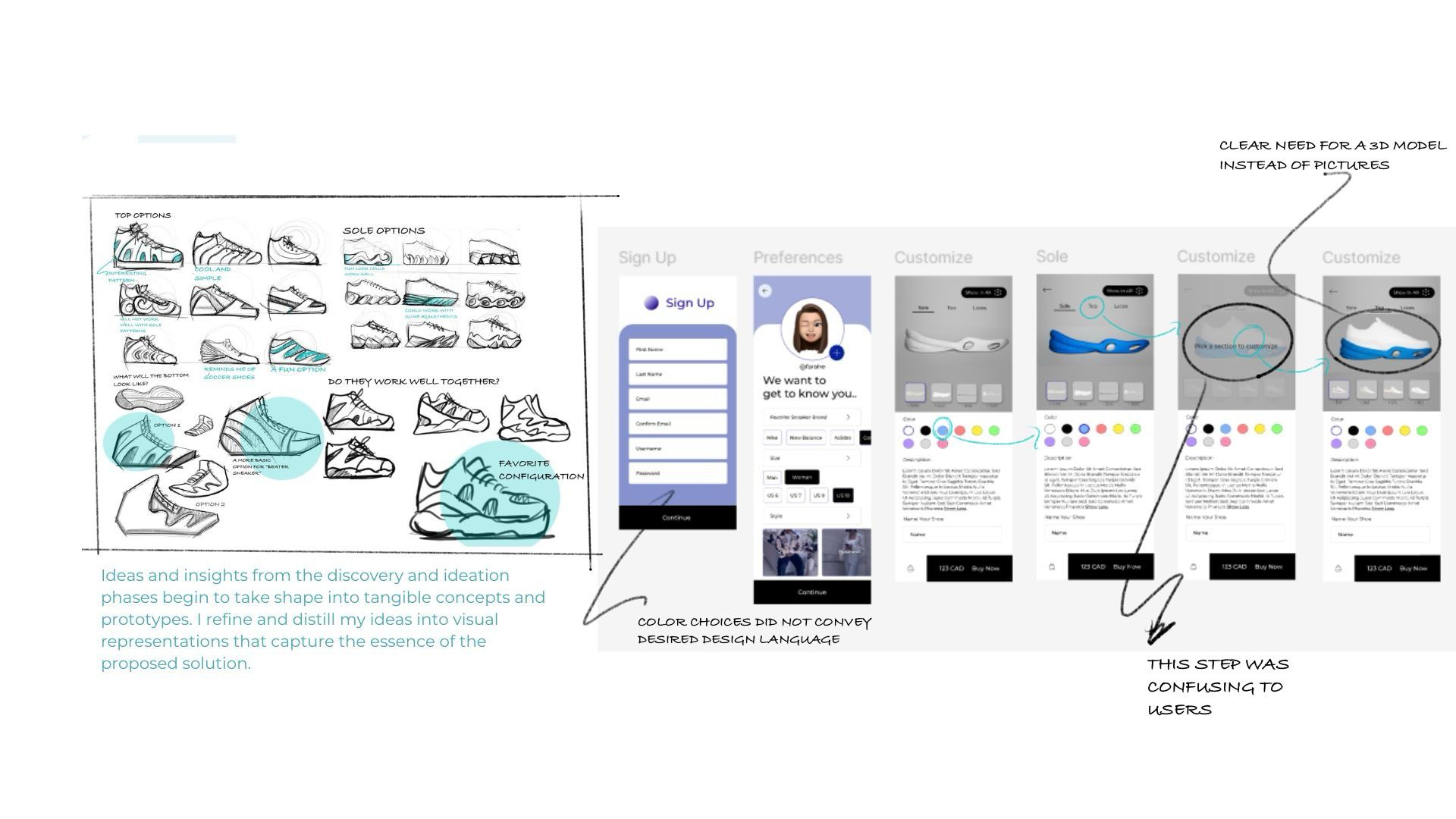
Throughout the process, every decision came back to one tension: how do you change behaviour without changing identity? Immersing myself in real sneakerhead communities online, observing how people talked about their collections, what they valued, what they defended, made one thing clear. This culture wasn't the enemy of sustainability. It was actually the most promising place to plant it. People who care deeply about the craft of a shoe, its materials, its construction, its story, are already halfway there. They just needed a product that spoke that language.
The algae sole became the anchor. A material that is renewable, purposeful, and genuinely interesting, the kind of detail a sneakerhead notices and talks about. From there, the design presets gave users a framework to work within, curated starting points that carried the sustainable logic without making it feel like a restriction. User testing pushed the work further, revealing that the sustainability message needed to be woven into the experience rather than announced by it. By the time the final design came together, SOLE-G had stopped feeling like a responsible alternative and started feeling like something people would actually want to own.
01
02
03
see also