master's project
This is a living archive of my Master’s research journey, a space where I explore, test, and iterate
00

problem
Indigenous oral histories and languages are typically preserved in static archives that lack the embodiment and interactivity needed to engage modern audiences, particularly younger community members. Physical museum exhibits often struggle to balance cultural respect, community control over sacred knowledge, and meaningful visitor participation while remaining accessible to diverse audiences.
solution
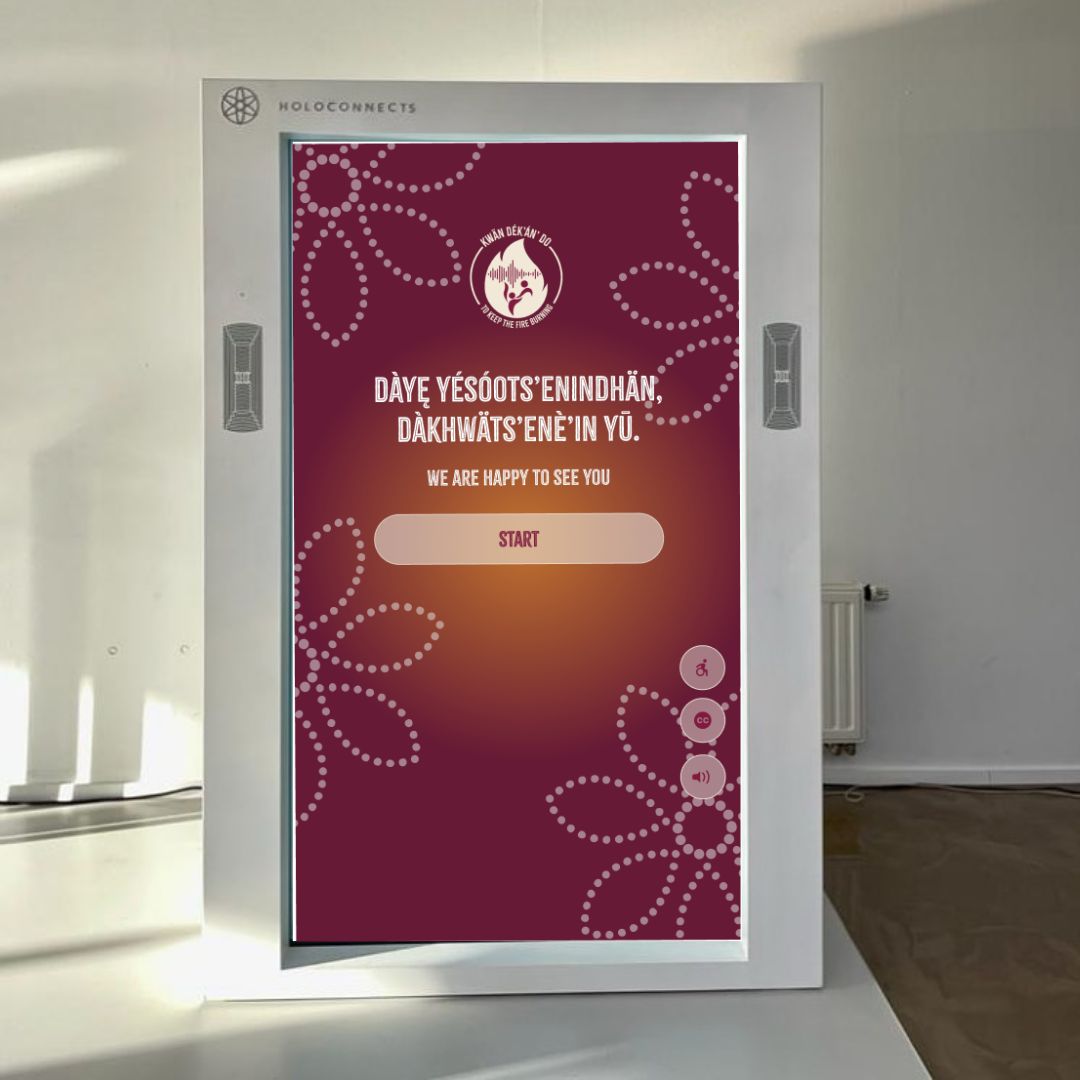
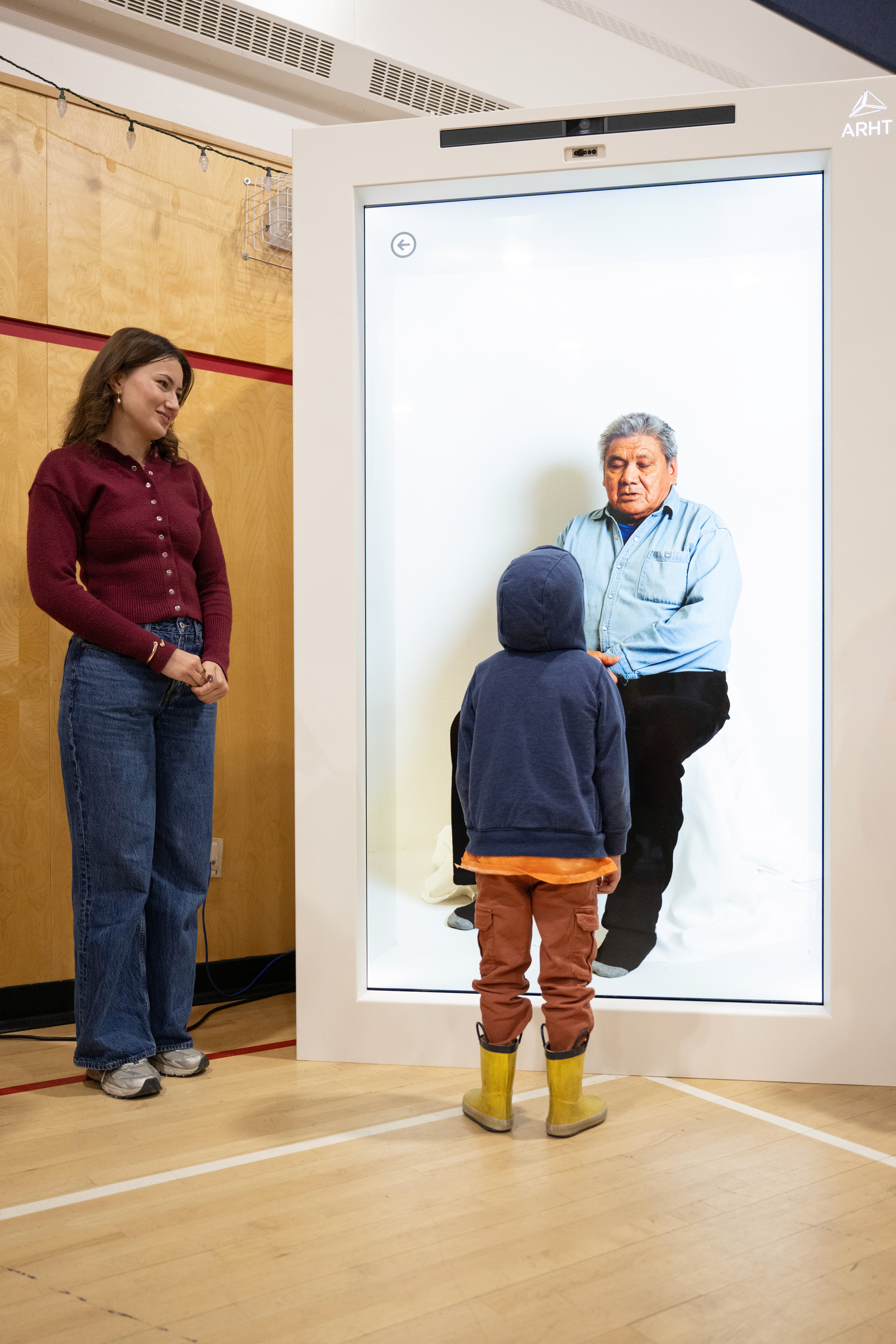
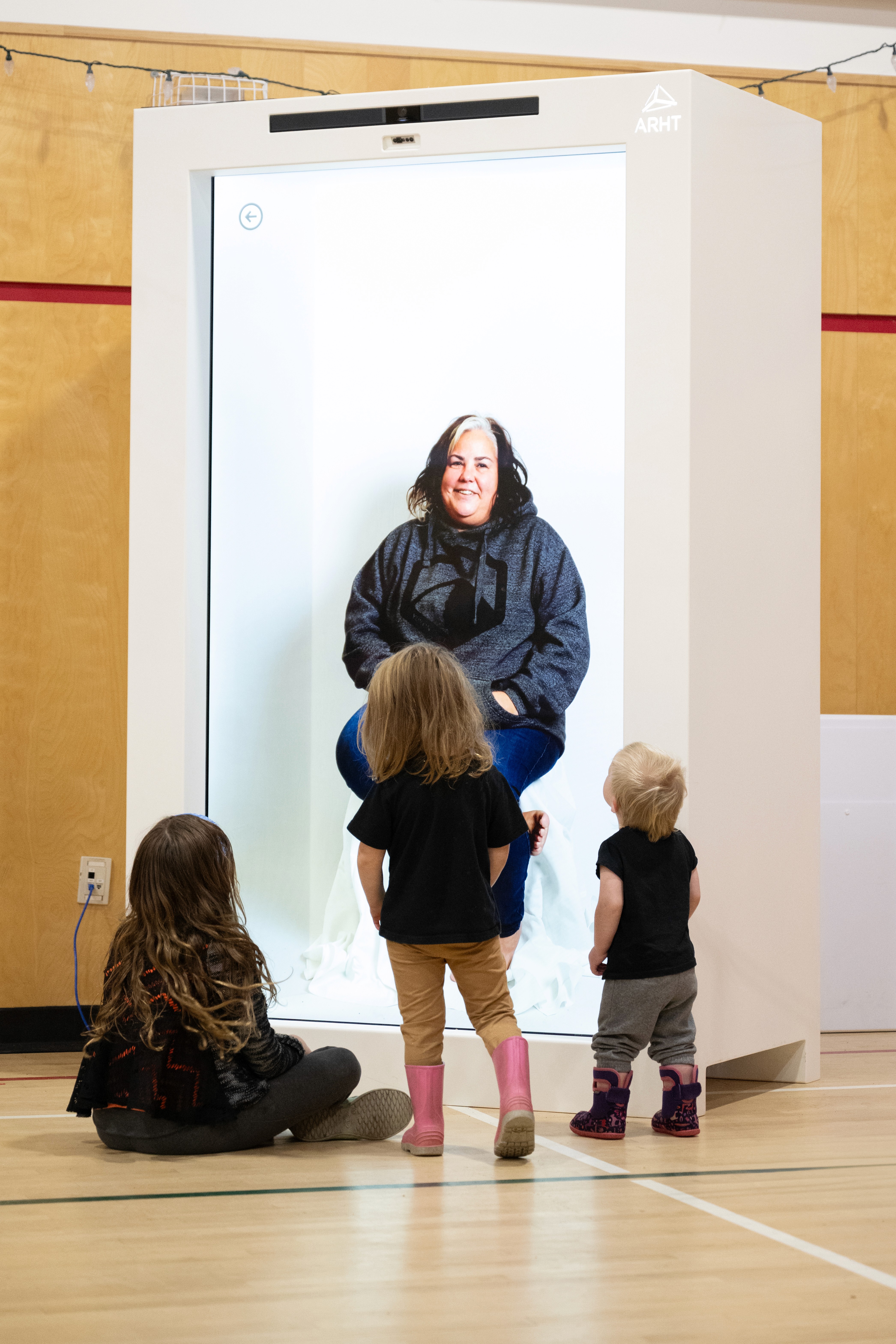
I designed the interaction and user experience for a life-size holographic system, taking a display unit built for trade shows and reimagining it as a vessel for something far more meaningful. The work centred on one question: how do you create a digital presence that feels culturally appropriate, not just technically impressive? Through participatory co-design workshops with Indigenous community members, I shaped interaction patterns, content frameworks, and cultural protocols in genuine collaboration, not as an outside designer handing over a finished product, but as someone listening and iterating alongside the people the work was for. The result integrates conversational AI, touch interfaces, and a narrative framework that lets users explore oral histories, learn from craft demonstrations, and examine 3D cultural artefacts. The prototype was presented directly to the community in Mayo, Yukon. Their feedback didn't refine the experience, it defined it.
From the beginning, this project was about more than technology. Moved by the quiet urgency of a language on the edge of silence, I set out to explore what design could do in service of something deeply human. The question wasn't how to build an impressive system, it was how to build an honest one. One that could hold the weight of oral histories, the texture of handmade artefacts, and the humour woven into a language fewer than a dozen people still speak. I envisioned an experience where culture wasn't archived behind glass, but alive, present, and in conversation with the people it belongs to.
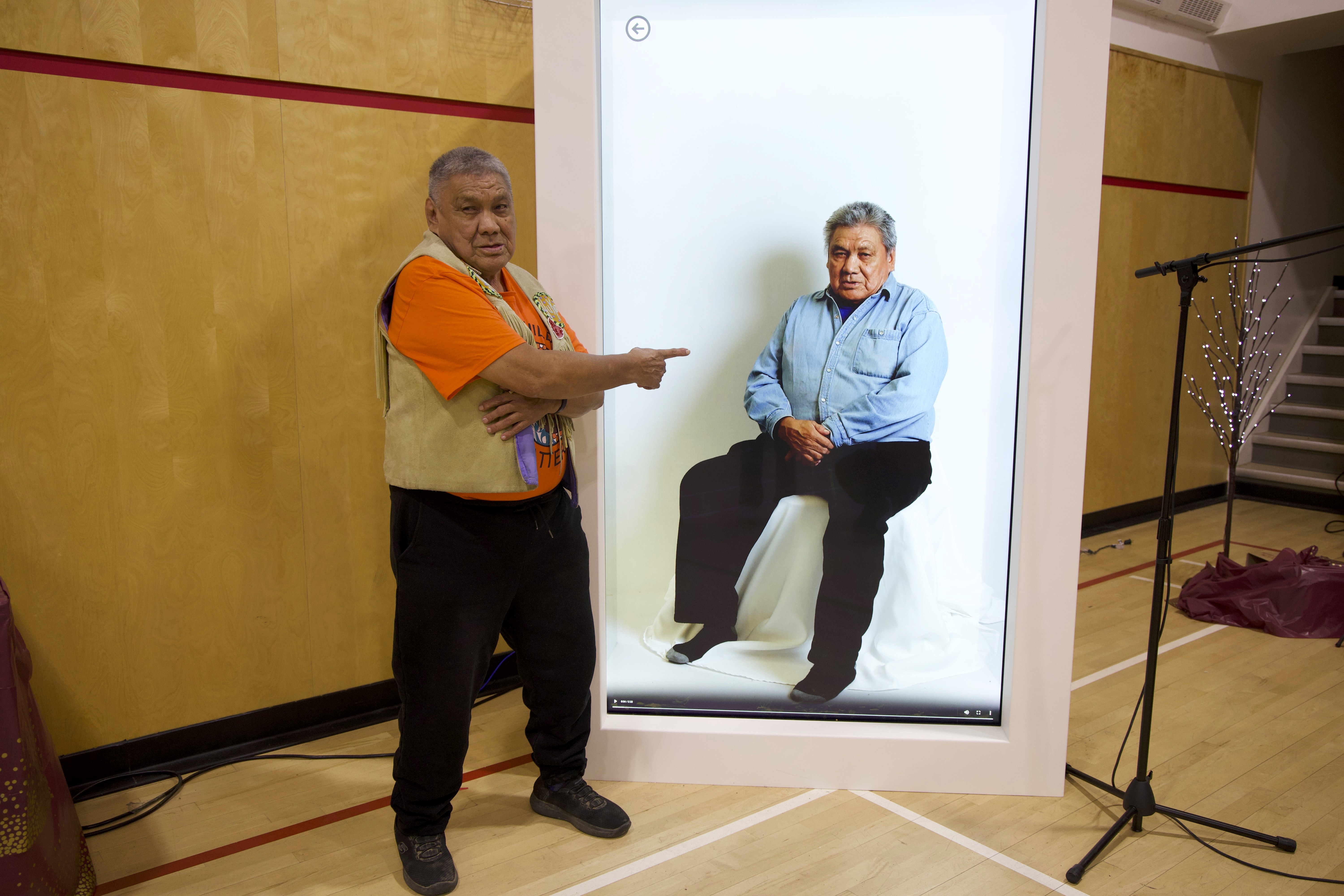
From the beginning, this project carried a name that said everything. Kwän Dék'án' Do - to keep the fire burning. Named by the Elders themselves, it set the tone for everything that followed: this wasn't a design challenge, it was an act of care. I came to it not as someone with answers, but as someone who understood that the right tools, used with humility, could help tend something irreplaceable. The First Nation of Na-Cho Nyäk Dun had already defined what mattered (culture, identity, language, continuity) and my role was to find the experience that could hold all of it honestly. Not to build something impressive, but to build something worthy.
Throughout the process, every decision was measured against a single question: does this serve the community, or does it serve the designer? Working alongside Indigenous knowledge holders, Elders, and community members through co-design workshops, I shaped an experience that moved at the pace of trust rather than the pace of a timeline. Interaction patterns were built and rebuilt. Cultural protocols informed what could be shown, how, and by whom. The technology (holographic displays, conversational AI, touch interfaces) was never the point. It was simply the material. What mattered was that the experience felt like something the community could recognise as their own: their humour, their artefacts, their stories, their voice.
When the prototype was brought to Mayo, Yukon and placed in front of the community it was made for, something shifted. What had been a design problem became something quieter and more important. Elders engaged with it. Younger community members saw their culture reflected through a medium that felt alive rather than archived. The feedback that came back didn't just improve the system, it deepened the understanding of what the work was really for. Kwän Dék'án' Do is not a finished product. It is a foundation, one built carefully enough to carry the weight of a language, a people, and the generations of learners still to come.
01
02
03
see also